What Is Word-of-Mouth Marketing? Why People Tell Others About a Product

On 19 April 1935 the Denver Post announced on its front page that dime chain letters were sweeping up thousands of people in the city. At the bottom of each letter were six names and addresses. Whoever received it was to send ten cents to the name at the top, cross that name off, add their own at the bottom and post five copies to people they knew within three days. If the chain held, each participant would receive 15,625 letters and USD 1,562.50.
Nobody knows who started it. According to the newspaper reports collected by Daniel VanArsdale, who compiled an archive of chain letters, the first copies had gone into the post a few weeks earlier, and that day the Denver postmaster said: "The whole city is talking about it." On 29 April the Denver Post reported that chain letters had tripled the city's mail; carriers were handling around 350,000 pieces. On 8 May the daily mail in St. Louis rose from 450,000 to 800,000 letters.
On 17 May postal officials in Washington announced that the fad was on the wane. By August, Denver's dead letter office held 100,000 letters containing more than USD 3,000 in coins and notes.
The chain letter showed how fast something can spread from person to person. It also showed something else: if the only reason people talk is a promised reward, the talking stops on the day the reward fails to arrive.
What is word-of-mouth marketing?
Word-of-mouth marketing is a product spreading because customers tell other customers about it: a friend's recommendation, a topic raised over dinner, an object everyone in the office comes over to look at. Unlike advertising, the message is carried not by you but by someone the listener trusts. The real question is this: why would people tell others about your product?

Why do people tell others about a product?
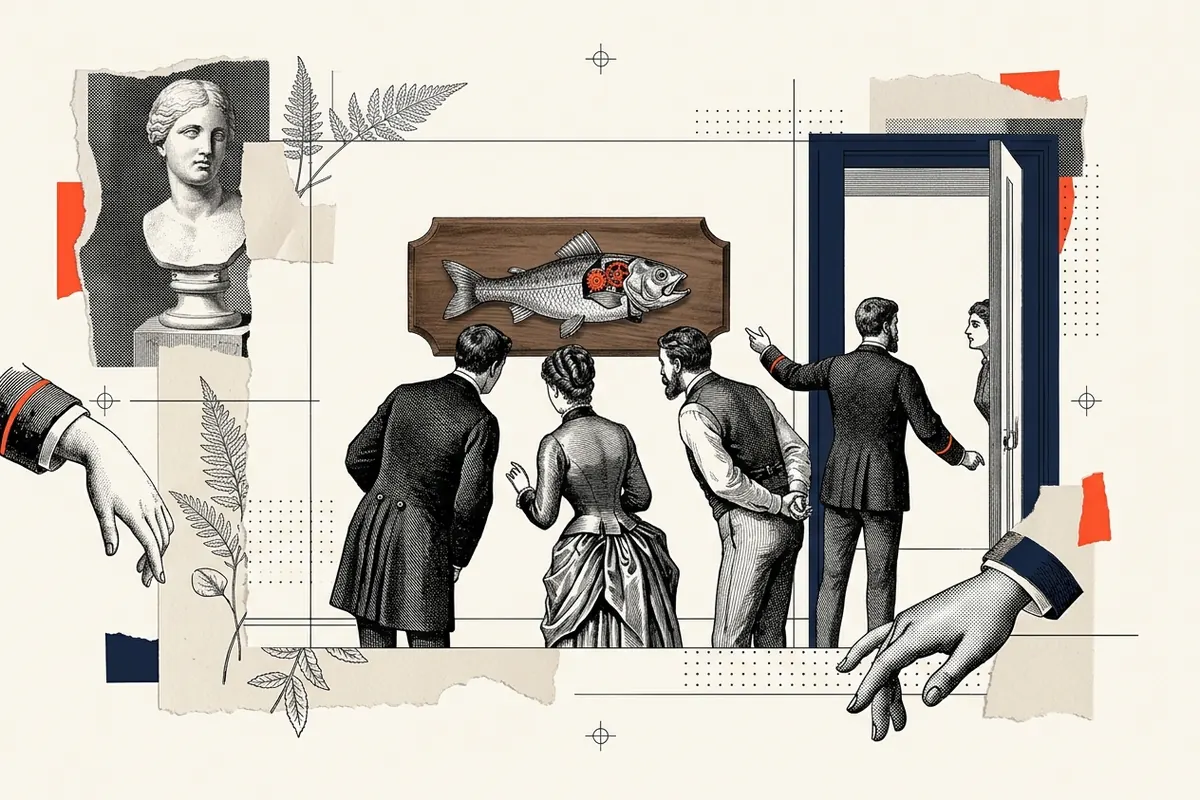
The story of Big Mouth Billy Bass, told by Wes Schlagenhauf in The Hustle, is a good answer. The idea came from Barbara, the wife of Joe Pellettieri, head of product development at the Texas novelty company Gemmy: as the two were walking into a Bass Pro Shops store on a road trip, she suggested a singing fish mounted on a plaque. According to Mental Floss, the fish was unveiled at a gift trade show in Atlanta in January 2000, reached shops in April 2000 priced between USD 25 and USD 30, and one Cracker Barrel store in Virginia sold 400 in three days. Gemmy does not publish figures; its revenue from the fish is rumoured to have topped USD 100 million.
Make something worth telling
According to The Hustle, Gemmy's executives did not like the first design. The turning point was a question Pellettieri put to the engineers in China: "Can you make the head turn?" The fish turned its head while it sang. People do not talk about ordinary products; they talk about a detail surprising enough to repeat. Does your product have a moment worth showing a visitor?
Build the conversation into the product
According to The Hustle, the way the fish sensed someone walking past and sprang into action did the same job. Everyone who saw it found an excuse to show it to someone else. If using your product naturally invites another person in, its spread does not depend on advertising: a shared document, a game for two, a joint list.
Do not grow demand faster than stock
As The Hustle tells it, Gemmy did no advertising at all, relied only on word of mouth and started with limited stock. Once demand had proved itself, the fish reached Walmart and Target shelves by Christmas 2000. Limited stock makes the curious ask around to find it. We have looked separately at when scarcity builds demand.
A reward is no substitute for a recommendation
The Denver letter spread on a reward and ended with it. Referral programmes can work, but they only speed up a product that is already worth talking about; they do not rescue one that is not. If nobody talks once you remove the reward, what you have is not recommendation but paid-for attention.
Ask where they heard about you
The simplest way to measure word of mouth is to ask each new customer, "Where did you hear about us?" If a friend's name or a community keeps coming up in the answers, your growth is coming from people, not from advertising.
Think about what is left when the wave passes
According to Mental Floss, by the autumn of 2000 Gemmy expected sales to fall and scaled back production; shops marked their remaining fish down to as little as USD 5. A product people talk about has to survive when the talking stops. The way to do that is to turn first curiosity into repeat use; we looked at that side in the pieces on loyalty programmes and customer churn.
Fama: fame and rumour in one word
The Latin word fāma, according to Wiktionary, comes from an old Indo-European root meaning "to speak" and is related to the Greek phēmē, "talk". Latin dictionaries give it four meanings at once: fame, infamy, rumour and reputation. The English fame comes from it. The same holds for a product: what people say about it becomes either fame or infamy, but both start with what people tell each other.
The sociologist Paul Lazarsfeld and his colleagues, studying the 1940 US election in Erie County, Ohio, found that people's political decisions were shaped more by conversations with those around them than by newspapers and radio. In 1955 Elihu Katz and Lazarsfeld extended the finding in Personal Influence, drawing on a study of 800 women in Decatur, Illinois: ideas passed from the media first to "opinion leaders" and from them to people like themselves. The model is known as the two-step flow of communication. Your product's opinion leader is most likely someone close to your customer and much like them.
A closing line
In the first chapter of Oscar Wilde's The Picture of Dorian Gray, Lord Henry tells his friend the painter:
"There is only one thing in the world worse than being talked about, and that is not being talked about."
If your customers are talking about your product today, would they keep talking without a reward?
If you want to know how the first customers are found, Finding Your First Customers is worth a read.