How to Launch a Product: Before, On the Day and After

The Times of 26 March 1836 carried a small notice: on the 31st, the first shilling number of a monthly serial called The Posthumous Papers of the Pickwick Club, edited by "Boz", would be published. Boz was Charles Dickens, then 24 years old.
The idea had actually come from the publishers, Chapman and Hall. They had in mind a monthly series to carry comic sporting plates by the artist Robert Seymour: a club whose members go out shooting and fishing and get into scrapes through their own clumsiness. Dickens was asked to supply the text between the pictures. He objected. He was no great sportsman, the idea was not new, and he argued that the plates should arise from the text rather than the other way round. The publishers agreed.
According to his biographer John Forster, the binder prepared just four hundred copies of the first number. It came out with 24 pages and four illustrations. Before the second number appeared, Seymour was dead. The series quickly settled a question that had already been under discussion: each number grew to 32 pages, and the illustrations dropped to two. Another artist drew one number, and from the fourth number Hablot Browne took over.
Forster says the trade only grasped what it had on its hands around the fourth or fifth number; in the fifth, a quick-witted servant called Sam Weller had entered the story. With no newspaper puffing or advertising, sales climbed with every number. By the summer of 1837, the binder's order for the fifteenth number was for more than forty thousand copies.
A launch is a process, not a day
The first number of Pickwick was not a failure; it was simply the beginning of the story. The real product was found after the launch, by watching the readers: more text, fewer pictures, and a character people would follow anywhere.
It helps to think of a product launch in three parts: before the launch, launch day and after the launch. Most founders pour their energy into the day in the middle. More often than not, the other two parts decide the outcome.
Before the launch: pre-sales, not a waiting list
Failory's guide to pre-selling points to a weakness in waiting lists and customer interviews alike: the niceness gap. People do not want to dampen your enthusiasm, so they say they like your idea more than they really do. The gap between those who say "let me know, I'll be first in line" and those who actually pay is exactly that. Pre-sales close it, because handing over money is not something politeness requires.
Show, don't tell
To sell a product that does not exist yet, people need to be able to picture it. In one example Failory describes, Brian Casel made a walkthrough video for his software, Ops Calendar, using nothing but animated screen mock-ups, and made his first pre-sales from that video within six weeks. A clear picture did the job a working product would have done.
Give early buyers a real reason
While the product is unfinished, waiting is always the sensible choice. Unless you offer early buyers a meaningful discount, direct calls with the founder or help with setting up, people will wait for the launch and you will never learn whether the demand is real. PriceUnlock capped its offer at a hundred customers; Orapa's founder, Stan Rymkiewicz, sent more than a hundred cold emails and sold around ten annual subscriptions, at an average discount of 60% and with a 90-day guarantee.
Answer the objection before it comes
You are asking for money for something that does not exist yet, so doubt is natural. Hassle-free refunds, a page of frequently asked questions and reviews from your first buyers build trust before you have to ask for it.
Launch day: use a few channels deeply
Failory's guide ends with one piece of advice: depth beats breadth. Rather than pushing on every channel at once, pick the one to three you can do really well. If you have an audience, use it; if not, go to the small communities where your customers already gather, to other people's publications, or to one-to-one messages. Leo Widrich, one of Buffer's co-founders, wrote 150 guest posts for other blogs before the company launched.
Pickwick had a single channel too: a few lines in The Times and a green-covered number sent to the booksellers on the last day of the month. The readers did the rest by telling each other.
After the launch: rewrite the second number
A launch is the moment your product first meets real users; the useful information comes afterwards. Look at which features people click, which page they give up on, and how they describe the product to someone else. Dickens's readers were after the text, not the pictures, and the series changed its shape once that was clear. Your product's Sam Weller may be the unexpected thing your users talk about most. Find it and make more of it.
A quiet first day is not a verdict either. The series that began with four hundred copies in the spring of 1836 had passed forty thousand with its fifteenth number in 1837.
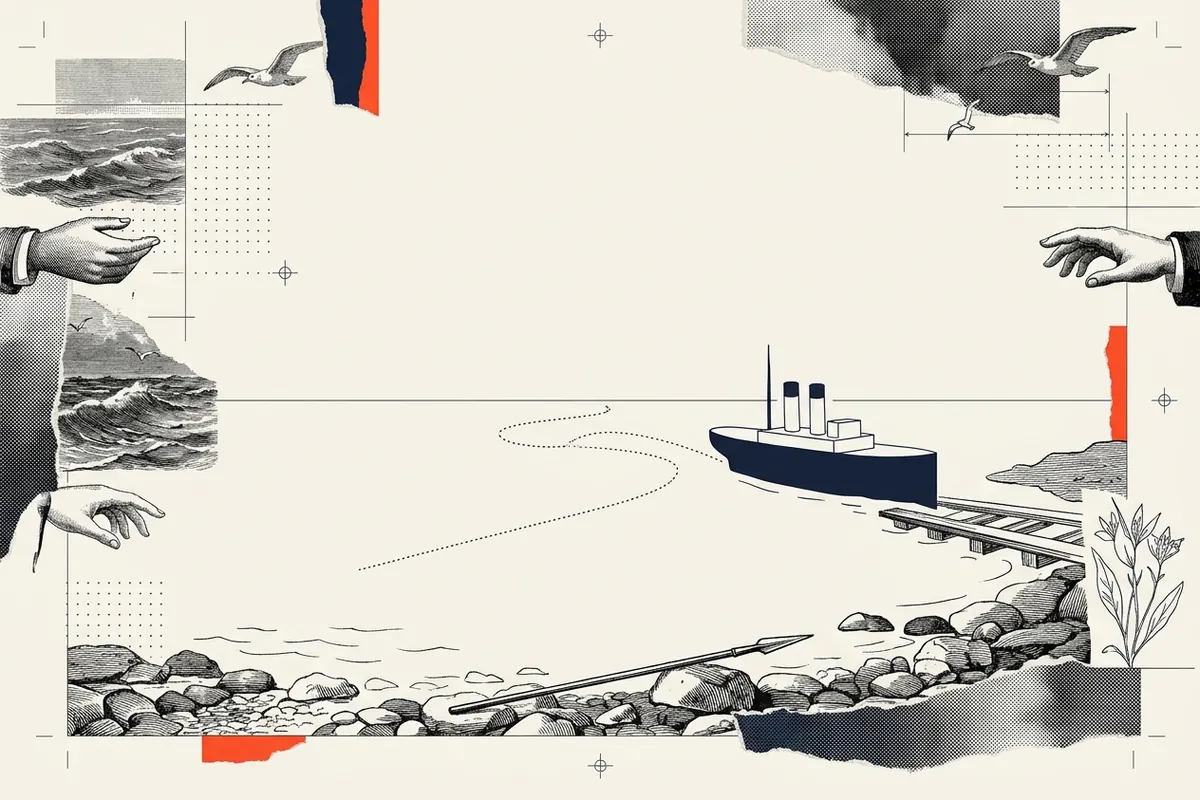
The spear and the ship
The Turkish word for a launch, lansman, comes from the French lancement. The verb lancer means "to throw", and its root is the Latin lancea, the light spear of Rome's auxiliary troops. The English launch also first meant to hurl something like a lance; only later was it used for a ship sliding into the water.
The two images could hardly be more different. A thrown spear's course is fixed the moment it leaves your hand; it cannot be corrected in the air. A ship sent down the slipway, on the other hand, is only beginning its voyage; its course is corrected at sea, by watching the wind and the current. A good product launch is much more like the ship than the spear.
A final word
Robert Louis Stevenson ends his essay El Dorado, collected in book form in 1881, with this sentence:
"To travel hopefully is a better thing than to arrive, and the true success is to labour."
The first number of Pickwick was not an arrival but the start of the road; the series found its real shape after the launch, by watching its readers. How much room does your launch plan leave for the road after the first day?
To decide what to build before you launch, What Is an MVP and How Do You Plan One? is worth a read.