What Is a Loyalty Programme? Do Points and Memberships Really Keep Customers?

In 1891 Schuster's department store in Milwaukee began handing small paper stamps to customers who paid in cash. The stamp was a thank-you for not buying on credit, and a handful of them could be exchanged for goods in the store.
Five years later, in 1896, Thomas Sperry and Shelley Byron Hutchinson turned the idea into a separate company. Sperry and Hutchinson sold the stamps to shops, and the shops handed them out with every purchase. Customers moistened the back, pasted them into 24-page books and swapped full books for a teapot, a rug or some other household item from the catalogue. According to a 1963 magazine article, a supermarket paid on average USD 2.45 for the stamps needed to fill one book.
It caught on. In 1957 an estimated 250,000 shops in the United States were giving out stamps, and nearly two thirds of households were saving them. In the early 1960s S&H boasted that it printed more stamps than the US government printed postage stamps.
Then everyone was doing it. Petrol stations, supermarket chains and department stores all had their own stamps. In the energy crisis of the early 1970s petrol stations dropped them, and supermarkets started advertising lower prices instead. Eagle Stamps, the last trading stamp company operating in the United States, closed in 2008.
The story of those stamps is also the story of the points piling up in apps today. A loyalty programme can keep customers, but only while it does something competitors do not. A reward everyone gives makes no one different; it simply becomes a cost.
What is a loyalty programme?
A loyalty programme rewards customers who come back: points, stamp cards, tiered membership or paid membership. They all say the same thing: "Come back to me next time." The real question is whether the programme changes behaviour, or simply pays customers who would have returned anyway.
When does a loyalty programme work, and when is it just a cost?
The advantage ends the day a rival copies it
American Airlines launched AAdvantage on 1 May 1981. It did not start from zero: it searched its reservation system for frequently recurring phone numbers and enrolled its 130,000 most frequent flyers, plus 60,000 members of its airport lounge club. Less than a week later United launched its own programme, and others followed. The race moved to programme features; American relaxed its rules and signed up hotel and car hire partners.
The lesson: a points programme is not a moat in itself, because a rival can copy it in a week. What lasts is what is hard to copy: the data on your customers, the partnerships you build and, above all, the product.
Paid membership lets customers make the decision themselves
According to Zachary Crockett in The Hustle, Costco makes almost nothing on the goods it sells: by its 2018 annual report, its average item was priced only 11% above cost. Its money comes from the annual fee charged just to walk through the door. As Crockett reports, in 2018 some 51.6 million people paid for Costco membership, the fees brought in USD 3.14 billion a year, and 90% of members renewed.
Points tell the customer "you have earned it"; paid membership says "you chose this". But that choice is renewed only while the customer gets real value in return. At Costco, the value is low prices. A programme that charges a fee and gives nothing back walks its own customers to the door at renewal time.
Work out what the reward will cost you before you start
Every point you give is a promise you will have to keep. That is why the stamp companies did not give stamps away; they sold them to the shops. When you design a programme, write down three numbers: how much a customer must spend to reach the reward, what the reward costs you, and what share of customers actually claim it. Until those three sit side by side, the programme is not a marketing idea but an open-ended debt.
Measure the effect against a group without the programme
Seeing that members come back more often is not enough; your most frequent customers are the first to join. To see the real effect, keep some customers out of the programme for a while and compare how often the two groups return. We explain how to measure retention in our piece on customer churn.
Does loyalty come from law, or from friendship?
The English word loyal comes from Middle French loyal and Old French loial, which go back to the Latin lēgālis, "relating to the law". The words legal and leal come from the same root; loyal and legal are really one word that arrived by two different roads. The Turkish word for loyalty, sadakat, comes through Ottoman Turkish from the Arabic ṣadāqa, "friendship".
The English word describes an obligation; the Turkish one, a relationship. Points programmes usually resemble the first: thresholds, rules, expiry dates. What the customer should feel is the second.
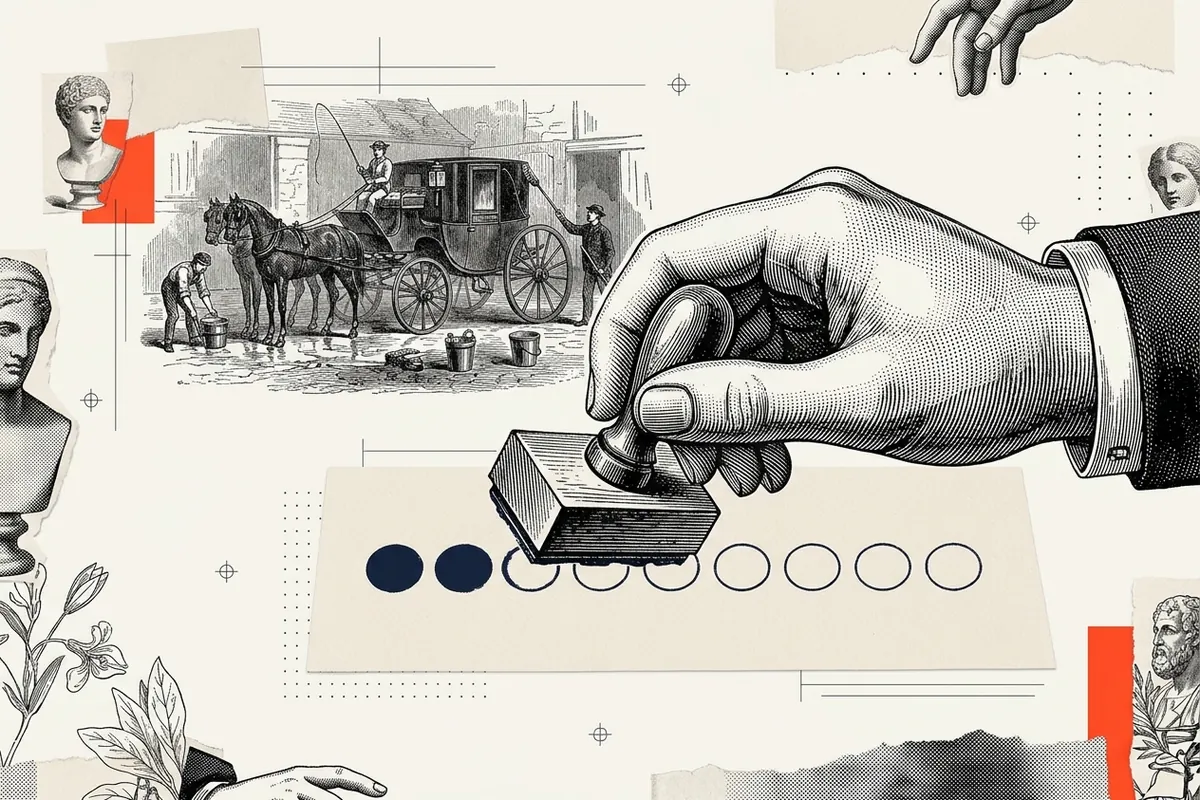
A study by Joseph Nunes and Xavier Drèze, published in the Journal of Consumer Research in 2006, shows a small version of this difference. At a car wash, 300 customers were given loyalty cards. One group got a blank card needing eight stamps; the other got a card with ten spaces but two already stamped. Both cards required eight washes. The group that started with two stamps completed their cards more often and more quickly. The researchers called it the endowed progress effect: a task that looks started but unfinished gets completed more often than one that has not begun.
A point, or a cause?
In The Philosophy of Loyalty, published in 1908, the American philosopher Josiah Royce defined loyalty like this:
"The willing and practical and thoroughgoing devotion of a person to a cause."
There is no reward in Royce's definition, only a cause. Do your customers come to you for a point, or for a cause? If you reset everyone's points tomorrow, how many would stay?
If you want to look at repeat customers through the lens of subscriptions, What Is a Subscription Business Model? is worth a read.