How to Build a Community Around Your Product and Keep It Alive

In June 1857 the Philological Society in London set up a committee to find words that were missing from existing dictionaries or badly defined in them. That November, Richard Chenevix Trench presented a study that counted seven separate shortcomings in the dictionaries of the day. On 7 January 1858 the society took a larger decision: it would make an entirely new dictionary covering every word in the English language.
The method was bolder than the plan. The books would be read not by lexicographers but by volunteer readers. Each reader would copy the sentence in which a word appeared onto a small paper slip and post it in.
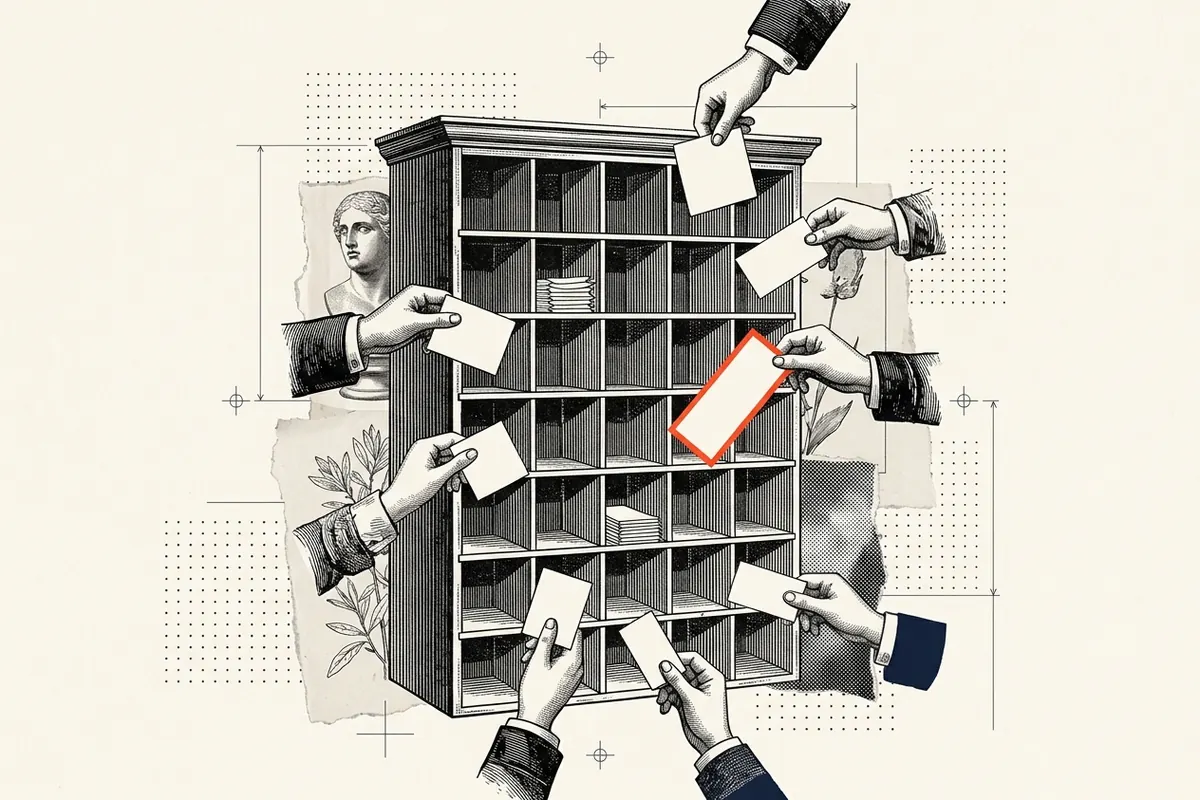
The first editor, Herbert Coleridge, arranged the 100,000 slips that arrived in a grid of 54 pigeon-holes. The first sample pages appeared in April 1861; Coleridge died of tuberculosis the same month, aged 30. His successor, Frederick Furnivall, recruited more than 800 volunteers. According to Wikipedia, Furnivall was enthusiastic and knowledgeable but temperamentally ill-suited to the work. He failed to keep the volunteers motivated; many readers lost interest over time and some of the slips went missing. What he passed on to his successor was nearly two tons of slips and papers.
In 1879 Oxford University Press agreed to publish the dictionary, and the editorship went to James Murray, a Scot who was teaching at Mill Hill School. Murray's first move was a fresh appeal; he looked for readers through newspapers distributed to bookshops and libraries. Before long, about 1,000 slips were arriving every day. In the school grounds he had a corrugated-iron shed built for his assistants and the slips, and named it the Scriptorium. By 1880 it held 2,500,000 slips in 1,029 pigeon-holes. Years later so much post was arriving at his house in Oxford that the Post Office put up a special post box outside it.
The first fascicle came out on 1 February 1884: A to Ant, 352 pages. When the Oxford English Dictionary was completed in 1928, it held 414,825 words and 1,827,306 quotations.
Where does a community sit in a product?
Furnivall and Murray had the same thing in their hands: a scattered crowd ready to help. With one, the crowd drifted away; with the other, it became a dictionary. The difference was not the number of volunteers but what they were given: a defined task, an address to send it to and a product that showed where their effort went.
A community built around a product today works the same way. Speaking to Starter Story in 2021, Matt Studdert described Frontend Mentor, which he founded in London in May 2018. The platform gave people learning to code professional designs and starter files, and had them build real projects. Studdert said they opened a Slack community next to the static site to bridge the gap between the site and what users wanted. By the time of the interview, the community had reached more than 70,000 developers helping one another. His point was plain: everything they built was still a direct result of conversations in the community. Their strongest growth channel was word of mouth.
How do you build a community?
Give people a shared task, not a chat room
Murray's readers were not joining a conversation club; they were joining a job: read, copy the sentence, post it. Frontend Mentor's members finished projects, shared them and helped one another where they got stuck. Opening a channel is not building a community. What brings people together is an action that repeats regularly and is tied to the product. Define that action first; the channel comes afterwards.
Set the door and the rules from the start
Furnivall's 800 volunteers were chosen inconsistently and given little guidance. As the crowd grew, the slips got mixed up and some were lost. If a newcomer does not know on day one what to do, how to share it and what is not accepted, the community comes apart as it grows. A short welcome, a few clear rules and a ready-made first task turn a crowd into a community.
Show where each contribution goes
Under Murray the slips did not sit on the shelves; from 1884 they turned, fascicle by fascicle, into printed pages, and the effort was tied to a visible product. In Studdert's community, too, suggestions became the product itself. If members cannot see their voice landing somewhere, they go quiet. When you put an idea from the community into practice, say so, and name who suggested it.
Turn the community into a role
Murray's Scriptorium was built not only for the slips but also for the assistants who sorted them. Studdert, too, was planning to hire a part-time head of community because the community was growing quickly. A community left as a side job for the founder's spare hours quietly dies out in the first busy season.
Duty and gift
The English word community comes from the Latin communis. Communis is made of the prefix com- and mūnis, and is related to mūnus. The meanings of mūnus draw an interesting range: service, burden, obligation and gift. Its root is an old one meaning "to exchange". In the word itself, a community is an exchange in which members carry duties and gifts to one another.
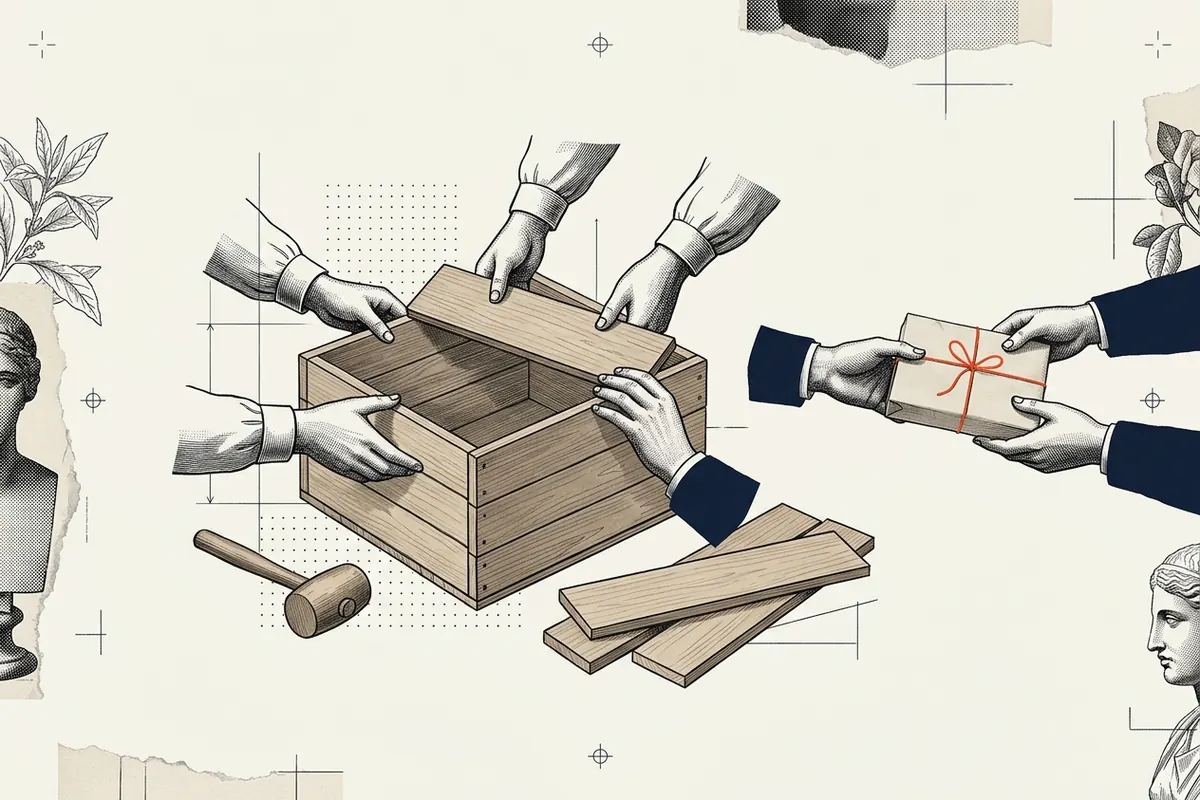
Psychologists have measured one side of that exchange. In a study by Michael Norton, Daniel Mochon and Dan Ariely, published in the Journal of Consumer Psychology in 2012, participants assembled IKEA boxes, folded origami and put together Lego sets. They valued what they had made with their own hands more highly than participants who had not made them valued the same objects. The researchers called it the IKEA effect. There was one condition: when the task was left unfinished or the creation was taken apart, the effect disappeared. People grow attached to something they have worked on once they see it finished.
Final word
Samuel Johnson wrote the dictionary he published in 1755 almost entirely alone; his only help came from clerks who copied out the quotations he had marked. In the preface he put it like this:
"The English Dictionary was written with little assistance of the learned, and without any patronage of the great."
Johnson's dictionary was finished in seven years. The Oxford English Dictionary, built from slips sent in by volunteer readers, took seventy years to complete, and it is still being updated today. Who is writing your product, and what work do you leave them each day?
If you are curious how the number of users can grow a product's value, What Is a Network Effect? How to Build One, and When It Turns is worth a read.