What Is a Network Effect? How to Build One, and When It Turns

On 26 July 1887 a slim pamphlet appeared in Warsaw. Its author called himself Doktoro Esperanto, "one who hopes". His real name was Ludwik Zamenhof, an eye doctor who had spent years building a common language that anyone could learn with ease. At the back of the pamphlet were small slips for the reader to tear out and post back.
Each slip, dated 1887, carried a single sentence: "I, the undersigned, promise to learn the international language proposed by Dr. Esperanto, if it shall be shown that ten million similar promises have been publicly given."
Zamenhof had seen the problem clearly. In his introduction he wrote that the unfeeling and indifferent world would never take any pains to speak with the few. So in 1887 he did not ask people to learn the language; he asked them to promise to learn it if everyone else did. Once the list reached ten million, the names would be published and the matter would settle itself.
The list never filled. By 1889 he had around a thousand signatures, one ten-thousandth of the goal. But the slip had another option. Anyone who struck out the condition and wrote "senkondiĉe", unconditionally, was saying they would learn the language whoever else did. The thousand people in the first address list Zamenhof published in 1890 were exactly these unconditional signers. When the first World Esperanto Congress met in Boulogne-sur-Mer in August 1905, the language had grown not from ten million promises but around this small group that refused to wait.
What is a network effect?
A network effect is when a product becomes more valuable to each user as more people use it. A single telephone is useless. The same goes for a messaging app, a marketplace or a payment system: the more people are there, the more sense it makes to join.
Writing in The Hustle, Alex Mayyasi argues that the effect is not limited to technology; it shapes the calendar too. The weekend is a network good: its value comes from your day off lining up with everyone else's. His example is the Soviet Union. In 1929, so that factories would never stop, the shared day of rest was abolished, workers were split into five colour-coded groups and each group rested on a different day. People had a day off, but their friends were at work. In June 1931 Stalin criticised the system, and the country moved to a six-day week with a common rest day for all.
In 2014 the sociologists Cristobal Young and Chaeyoon Lim reached the same conclusion from the answers of more than half a million people: the mood of the unemployed lifts at weekends in a strikingly similar way to that of workers. What makes the weekend valuable is not time off as such but everyone being free at once. Free time on weekdays gives the unemployed comparatively little; everyone else is at work.
How do you build a network effect?
The hard part is the start. A network effect needs a network, and a network needs the network effect. Zamenhof's pamphlet shows three ways out of that loop.
Make it useful before the network exists
Zamenhof designed his language to be usable whether or not it was ever universally adopted. Every word was built from unchanging parts; hand a stranger a letter with a small vocabulary beside it, and someone who had never heard of the language could still decode it. Your first user should get something from the product before anyone else arrives. The tool comes first; the network follows.
Don't collect promises, find the unconditional
The ten million conditional promises sought in 1887 never produced a single conversation; the thousand unconditional users of 1890 produced a language. A crowd saying "I'll come if everyone comes" means nothing in the early days. Your first job is to find the small group that will turn up without waiting, and to help them find each other.
Start dense, not big
Young and Lim's finding says something else too: value comes not from the total number of users but from the people you want to talk to being there. A full network in one city, one profession or one school is stronger than a thin one spread across the world.
When does a network effect run in reverse?
The same force works backwards. Before Esperanto, the stage belonged to Volapük. In 1889 it claimed close to a million adherents and had hundreds of clubs. Then a fight broke out between its creator, Johann Martin Schleyer, and the academy pushing for reform, over who the language belonged to. Supporters began to leave, and every departure made the language a little less useful to those who stayed. Over time many Volapük clubs turned into Esperanto clubs.
Mayyasi thinks the weekend is unravelling in a similar, quieter way: if everyone is officially off but must keep checking their phone, shared free time looks as if it exists when it does not. Networks rarely collapse overnight; they hollow out. That is why it matters to check whether your users are really there.
The language of the Franks and the meeting point
Lingua franca, the term for a common tongue, is Italian for "the Frankish language". It was the name of the mixed language used by traders across the medieval Mediterranean; in the late Byzantine period all Western Europeans were called Franks, and Arabic had the same word. Turkish Frenk comes from the same place by way of Persian farang. A language that was nobody's mother tongue was valuable because everybody used it.
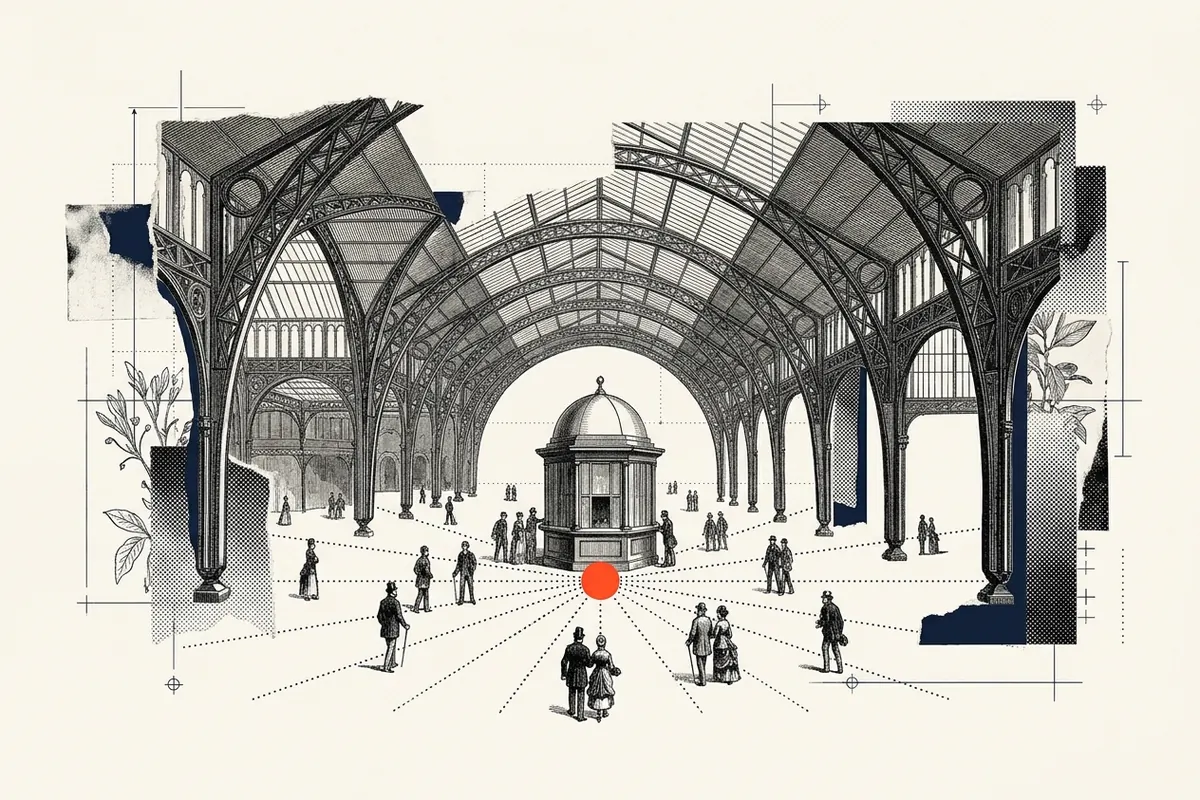
The economist Thomas Schelling gave the idea a name in The Strategy of Conflict, published in 1960: the focal point. He asked his students where they would go if they had to meet a stranger in New York without having agreed on anything beforehand. The most common answer was Grand Central at noon. It was not a better place; it was simply where everyone expected everyone else to go. A startup building a network effect is really trying to become a meeting point like that.
A final word
In the last chapter of his Essays, Montaigne compares conversation to a ball game and says:
"La parole est moitié à celuy qui parle, moitié à celuy qui l'escoute."
Speech belongs half to the one who speaks and half to the one who listens.
Zamenhof's language came alive in 1890, when it found a thousand people ready to listen. Who are the first people who would use your product even if nobody else came?
To find the first users who will come without waiting, Finding Your First Customers: The Road from Zero to Your First Sale is worth a read.