Why Did Juicero Shut Down?

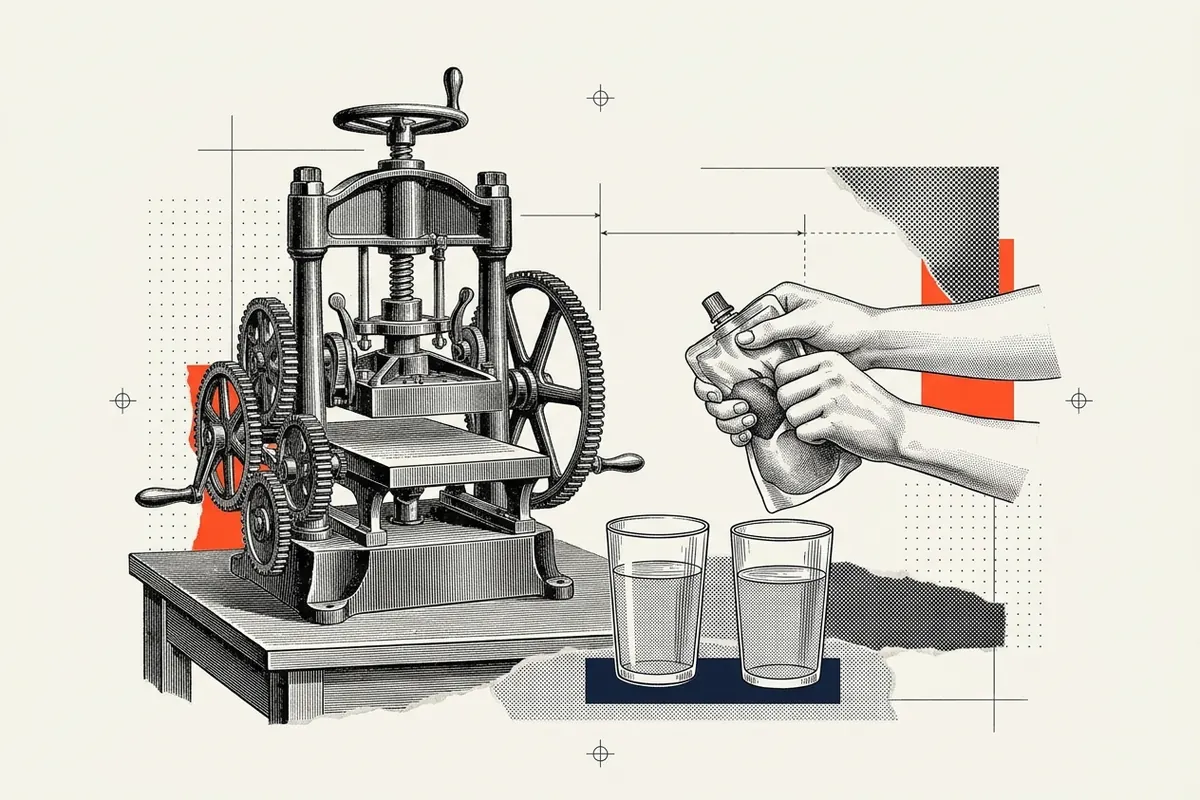
On 19 April 2017 two Bloomberg reporters, Ellen Huet and Olivia Zaleski, ran a simple experiment. Instead of putting one of Juicero's fruit and vegetable packs into the machine, they squeezed it by hand. In a minute and a half they got 7.5 ounces, about 220 millilitres, of juice. The company's machine squeezed the same pack in about two minutes and produced 8 ounces.
The difference was a few sips at the bottom of a glass. The price of those sips was a 400-dollar machine. Within days the story had become a symbol of Silicon Valley building expensive answers to problems nobody had. Five months later the company stopped selling.
What did it do?
Juicero was founded in San Francisco in 2013 by Doug Evans. The idea was to turn home cold-pressed juice into a subscription business. The internet-connected Juicero Press worked only with the company's own single-use packs of pre-chopped fruit and vegetables. According to Bloomberg, packs cost between 5 and 8 dollars each and had a shelf life of about eight days.
Every pack carried a QR code. The machine would not press until it had read the code and checked it online. The company presented this as a safety measure that blocked expired packs. Critics saw a lock that kept other makers' packs out.
The machine itself was a feat of engineering. Evans told Bloomberg it had 400 custom parts, that he had spent about three years building a dozen prototypes, and that the press applied four tons of force: "enough to lift two Teslas." The industrial design came from Yves Béhar's studio Fuseproject. Between 2014 and 2017 the company raised about USD 120 million from investors including Kleiner Perkins and Google's venture capital arm.
What went wrong?
The timeline recorded in the sources looks like this:
- March 2016: The machine went on sale for 699 dollars. Sales were slow.
- October 2016: Jeff Dunn, former president of Coca-Cola North America, became CEO. Evans moved to chairman of the board.
- January 2017: The price was cut to 399 dollars. According to Wikipedia, the cut came 12 to 18 months ahead of schedule.
- 19 April 2017: Bloomberg's hand-squeeze test was published. Two investors quoted in the story said the final product was bulkier than what had been pitched to them and that they were puzzled customers could get similar results without the machine.
- April 2017: The company argued that squeezing by hand was messy and a poor user experience, then offered refunds to unhappy customers. In the same days Ben Einstein, a partner at Bolt, took the machine apart. According to Wikipedia, he called it "an incredibly complicated piece of engineering" and suggested that a simpler design could produce juice of similar quality for several hundred dollars less.
- July 2017: According to The Register, the company cut staff.
- 1 September 2017: Juicero stopped selling machines and packs. It gave owners until 1 December to claim a refund and said it was looking for a buyer with a national fresh food supply chain. According to the announcement, an effective manufacturing and distribution system for a nationwide customer base required infrastructure the company could not build on its own.
The shutdown announcement talks about logistics. The timeline points to a more basic question. The machine could not prove why it existed. Customers were paying for juice. The machine was the most expensive way to get it.
Lessons for founders
- Race your product against the simplest alternative. Before launch, ask: how close does a customer get to the same result without this device, using the most ordinary tool at hand? For Juicero the answer was two hands.
- Write the target price at the start of the design. A device designed without a cost limit can become a product whose every part is flawless and whose total cannot be sold. That was Einstein's conclusion too.
- A lock that adds no value draws a backlash. A business model tied to consumables works when the consumable genuinely improves the main product. The piece on the razor and blades model explains how that balance is struck.
- The number of investors is not proof. Juicero raised large sums from well-known investors. But the product's core assumption was tested by a reporter's two hands, not by pitch decks. Testing your assumption early with a small MVP is the cheapest test there is.
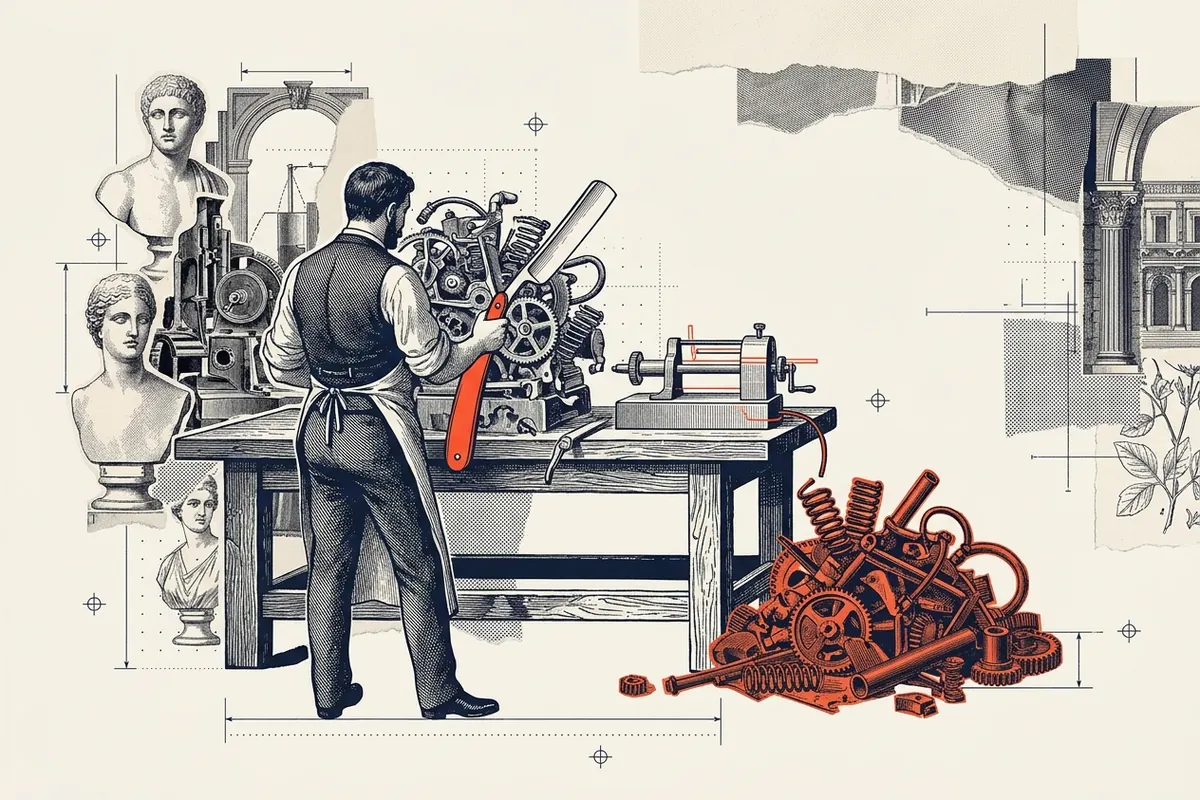
Ockham's razor: what can be cut?
The principle named after the medieval English philosopher William of Ockham (about 1287 to 1347) says, in short: do not assume more than you need. The form that appears in Ockham's own writings is "Numquam ponenda est pluralitas sine necessitate", that is, "plurality should never be posited without necessity".
The interesting part is that the most famous Latin version of the principle is not Ockham's. "Entities are not to be multiplied without necessity" appears, according to Wikipedia, in a 1639 commentary by the Irish Franciscan John Punch. The name "Ockham's razor" itself only shows up in 1649, in a work by Libert Froidmont. Even the principle picked up extra layers over time.
The razor image fits. It suggests cutting away every part of an explanation, a plan or a product that does not change the result. For Juicero the question was: how much better did 400 custom parts and four tons of force make the juice than the customer's own two hands? The answer was a few sips at the bottom of a glass.
You can ask the same question of every part as you design your product: if this part were not there, would the customer notice any difference?
Useful or beautiful?
In "The Beauty of Life", a lecture given in Birmingham on 19 February 1880, William Morris offered his audience a golden rule that would fit everybody:
"Have nothing in your houses that you do not know to be useful or believe to be beautiful."
Juicero entered kitchens as a beautiful machine. It left them on the day it could not prove it was useful. Which is your product in your customer's life: something they know to be useful, or a machine they simply like to look at?
You can find Juicero's record and its sources on its page in the Startup Graveyard, and the stories of other startups that shut down in the Startup Graveyard archive.