What Is a Productized Service? Turning Freelance Work into a Package

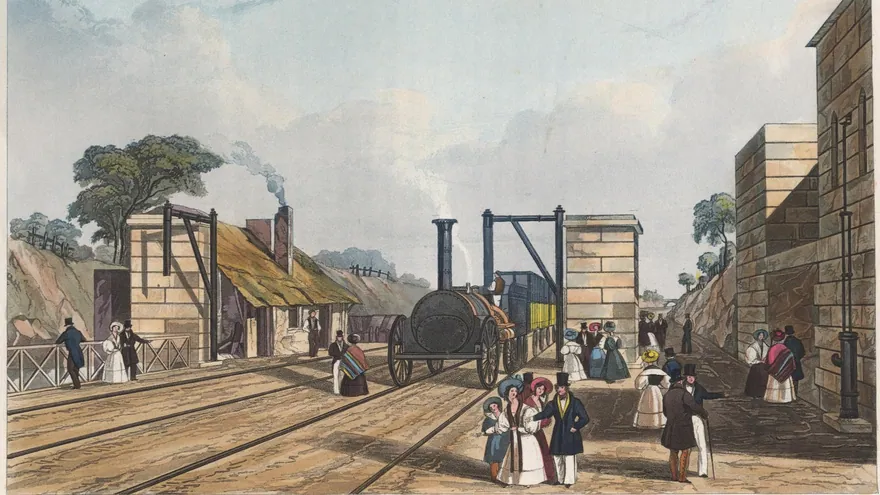
On 5 July 1841 about 485 people boarded a train in Leicester. All of them were members of the Leicester Temperance Society, on their way to a meeting in Loughborough. The trip had been organised by a man named Thomas Cook, who in his youth had worked as an itinerant Baptist preacher. Cook had hired a whole train from the Midland Counties Railway and charged one shilling a head. That shilling covered the journey there, the journey back and a meal.
The passengers had not bought a ticket; they had bought a package. Nobody haggled with the railway company, asked about times one by one or wondered where to eat. The price was fixed in advance and so was what it included. The trip is remembered today as the world's first package tour.
In the years that followed Cook scaled up the same logic. In 1851 he arranged travel for 165,000 people to the Great Exhibition in London. In 1868 his firm introduced hotel coupons: a traveller handed over a coupon, bought in advance, for a night's stay or a restaurant meal at a hotel on Cook's list. Travel had turned from a string of services negotiated one at a time into a product sitting on a shelf.
What is a productized service?
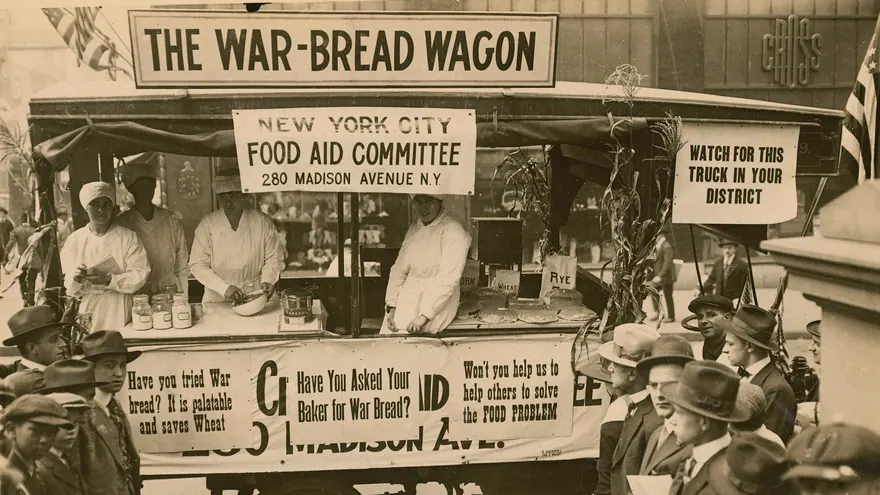
A freelancer or consultant usually sells their time. With every client the scope is discussed again, the price recalculated and the deadline renegotiated. A productized service is the opposite: the scope, the price and the delivery time are fixed in advance, and the client buys as if choosing from a menu. You still deliver the service, but you sell it like a product.
In an interview published by Starter Story on 14 December 2022, Lianna Patch and James Turner describe building their copywriting service, SNAP Copy, this way. In May 2016 the pair took over a service that Joanna Wiebe of Copy Hackers was about to close; Wiebe handed them the domain and the creative assets, but not the customer list. SNAP sells by credit rather than by the hour: clients buy packs of credits they can use within six months, a Facebook ad costs 1 credit and optimising a landing page costs 4. A small job can be delivered within 48 hours. According to the interview, the service was bringing in about USD 10,000 a month in 2022.
1. Find the job that comes up most often
The starting point of productizing is the job clients bring you most often. Cook's starting point was a concrete need as well: getting society members to a meeting together and cheaply. Put the requests of your last ten clients side by side; if three of them are the same job, your first package is right there.
2. Define the scope with a unit
"I do everything" is not a package. SNAP's credit breaks the work into measurable units: the client sees up front what costs how many credits, and you know where the scope ends. According to a Starter Story piece dated 21 June 2024, when Brett Williams set up his design service Design Joy over a single weekend in 2017, he accepted only one design request at a time and delivered each within two days. Large projects were broken into pieces, and each piece was done in turn.
3. Tie the price to the delivery, not the hour, and take the money up front
Design Joy started in 2017 with two plans at USD 449 and USD 849 a month; according to the same piece, the monthly fee was USD 4,995 in June 2024. Because clients buy a result rather than hours, the price can grow with the value of the work. SNAP's founders point to another benefit of selling credits in advance: the money is in the bank before the writers are paid. If you want to think about cash flow, the bootstrapping piece is a good companion from that angle.
4. Remove the friction and open the door small
Williams's advice is simple: a repeatable, fixed-price offer with no meetings and no complex contracts. Every meeting risks turning the package back into a custom project. SNAP, for its part, added a cheaper product called video audits in 2022; according to the interview, the aim was to offer a lower-cost entry point before the credit packs.
The roots of the word service
The Turkish word hizmet comes via Ottoman Turkish from the Arabic khidma, whose root is the verb khadama, "to serve". The English service goes back through the Old French servise to the Latin servitium, and from there to servus, a servant or slave. In both languages the word describes one person working for another; there is no idea of a mould or a package in it.
In the September 1972 issue of the Harvard Business Review, Theodore Levitt questioned that distinction in an article titled "Production-Line Approach to Service". In Levitt's view, treating service as the domain of people and manufacturing as the domain of machines was largely misleading, and he wrote: "There are no such things as service industries." In other words, there is no separate service sector; every business has a larger or smaller service component, and that component, too, can be designed like a production line.
What does not fit in the package?
In "Signs of the Times", published in the Edinburgh Review in June 1829, Thomas Carlyle described his era as the mechanical age and added:
"Not the external and physical alone is now managed by machinery, but the internal and spiritual also."
A productized service also pours part of your work into a mould. Which part of your work fits into a package, and which part deserves to be thought through afresh for every client?
If you are working out how to price your packages, Startup Pricing: How Do You Put a Price on Your Product? is worth a read.