Why Did Zume Shut Down?

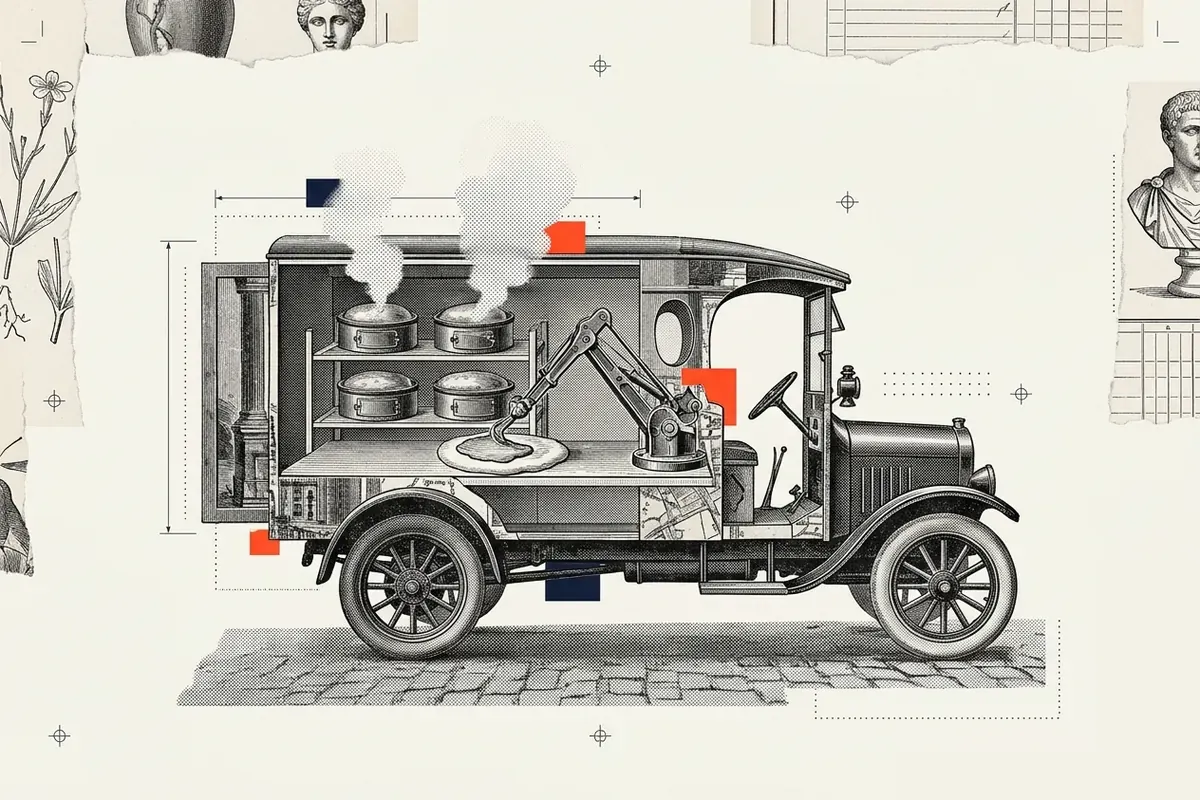
In September 2016 a delivery van set off through Mountain View, California. Inside it were 56 ovens. The pizza baked on the way to the customer's door, and robots had dispensed and spread the sauce on the dough before it went in. Describing the kitchen to Fortune, co-founder Julia Collins called it an environment of "humans and robots working collaboratively".
It was an impressive show. Seven years later, in June 2023, the company closed its doors after raising more than USD 400 million. Along the way it had stopped selling pizza, tried to sell technology to automated food trucks and finally turned into a factory making compostable packaging. Zume's story is the story of a company searching for a problem to fit the technology it already had.
What did it do?
Zume was founded in 2015 by Alex Garden and Julia Collins under the name Zume Pizza. According to Fortune's 2016 report, Garden had been president of Zynga Studios, while Collins came from the restaurant trade.
The idea had two parts. The first was to hand the repetitive kitchen tasks to robots: dispensing sauce, spreading it, putting the pizza in the oven. The second was to hide the baking time inside the delivery time. According to Wikipedia, the first pizzas were cooked in September 2016 in a van carrying 56 GPS-equipped automated ovens and sliced by a self-cleaning robotic cutter. The company also patented the method of cooking during delivery.
Investors were interested. In 2016 a USD 6 million Series A came from Jerry Yang and SignalFire, followed in autumn 2017 by a USD 48 million Series B.
What went wrong?
The recorded timeline shows how the vision grew before the core product had settled:
- 2016 to 2018: Baking pizza in a moving vehicle turned out to be impractical. According to the sources behind our graveyard record, customers also complained about the quality of the robot-made pizzas. The bake-on-the-road idea was eventually shelved.
- 2018: The company moved away from pizza, formed Zume, Inc. to supply technology for automated food trucks and began licensing its automation technology. According to Wikipedia, it projected revenues of USD 250 million and USD 1 billion in the final quarters of 2020 and 2021.
- November 2018: SoftBank invested USD 375 million, valuing the company at USD 2.25 billion. In 2019 there was talk of a USD 4 billion valuation.
- 2019: Zume bought Pivot Packaging, a maker of plant-based packaging. According to Nation's Restaurant News, Garden announced plans that year for a packaging plant of around 70,000 square feet in Southern California.
- 2020: Zume laid off more than 500 employees, including its entire robotics and delivery truck departments. It sold its pizza technology business and by May 2020 had started making compostable food packaging.
- June 2023: The company shut down. Nation's Restaurant News, citing The Information, reported that Zume chose to liquidate its assets rather than file for bankruptcy. According to Crunchbase it had raised USD 423 million over eight rounds; as the report noted, the exact figure is disputed.
Each new direction moved into a new field instead of solving the problem of the one before. The platform arrived before the pizza had worked, and the packaging before the platform had. In packaging, too, the company could not carry the weight of the years it had spent building robots and vans.
Lessons for founders
- Measure the product, not the show. Pizza baked on the road made a good headline. Customers, though, remember how the pizza tasted, not who made it. Make your first metric not that the technology works, but that the customer orders again.
- If a big round pushes you to enlarge the vision, stop and ask. The USD 375 million of 2018 built a bigger platform story on top of an unproven pizza business. The size of the cheque does not change the maturity of the product.
- When you pivot, rebuild the team and the costs too. The structure built for pizza robots and vans stayed on as a heavy load when the business moved to packaging. A company that changes direction ends up paying for the old business out of the new one's budget.
- Choose the new direction from your customer, not your technology. "What else can our robots do?" is no substitute for "whose problem are we solving?"
We looked at when a change of direction makes sense in our piece on pivots. Zume's record is in the Startup Graveyard, and similar stories sit under failed pivot.
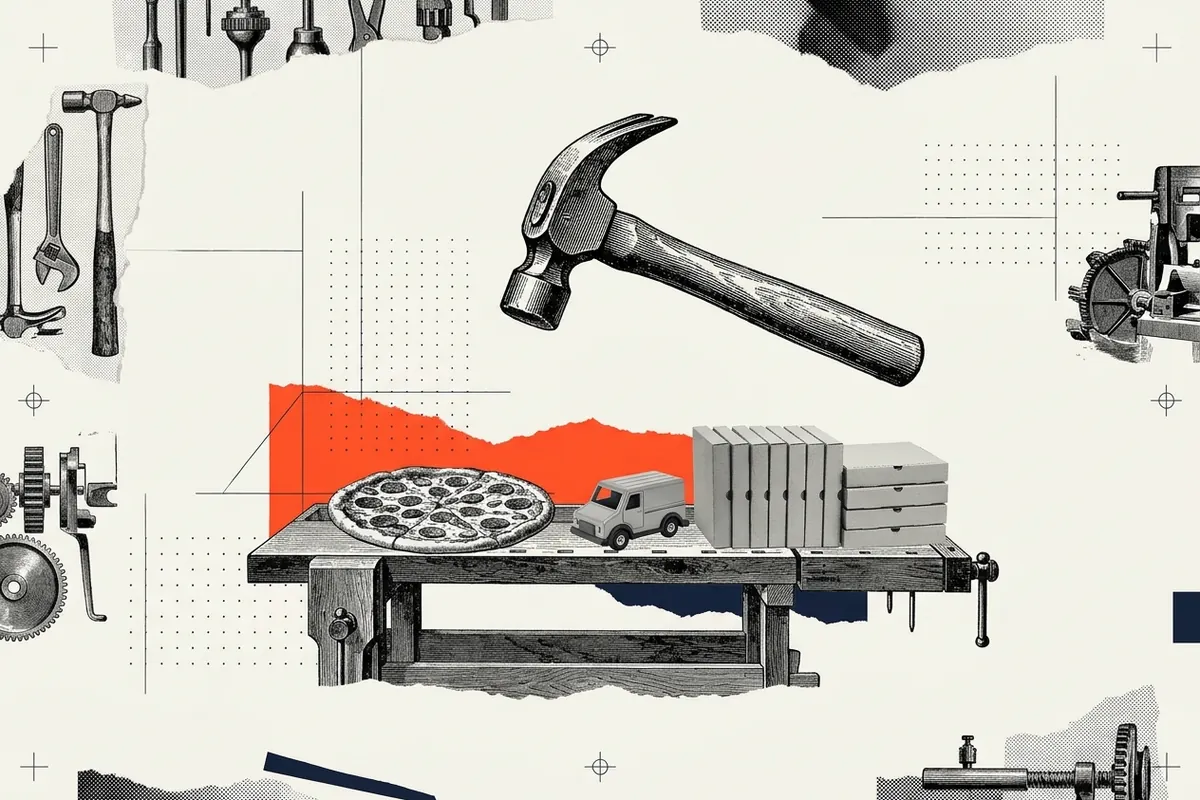
The law of the hammer: looking for problems to fit your tool
In The Conduct of Inquiry, published in 1964, the philosopher Abraham Kaplan wrote down an observation: give a small boy a hammer and he will find that everything he encounters needs pounding. Two years later the psychologist Abraham Maslow put the same idea in its better-known form in The Psychology of Science: if the only tool you have is a hammer, it is tempting to treat everything as if it were a nail.
The tendency is known as the law of the instrument, or Maslow's hammer. In start-ups its most expensive form appears after heavy investment in a technology. Once the robots, ovens and vans are built, the company starts seeing every new problem through them. When pizza did not work, the question became not "what will people pay for?" but "what else can these machines automate?" The hammer stayed the same; only the nails were sought.
The remedy is simple but hard: at every new turn, describe the problem first without thinking about the machines at all, then check whether the technology in your hands is really up to it.
Learning from failure
Samuel Smiles writes in the eleventh chapter of Self-Help, published in 1859:
"We learn wisdom from failure much more than from success."
Zume's lesson sits right there. So what is the hammer in your hands, and how many of your recent decisions came not from the customer's problem but from that hammer?
For the stories of other start-ups that closed, the Startup Graveyard is worth a read.