What Is a Franchise? When Buying or Granting One Pays

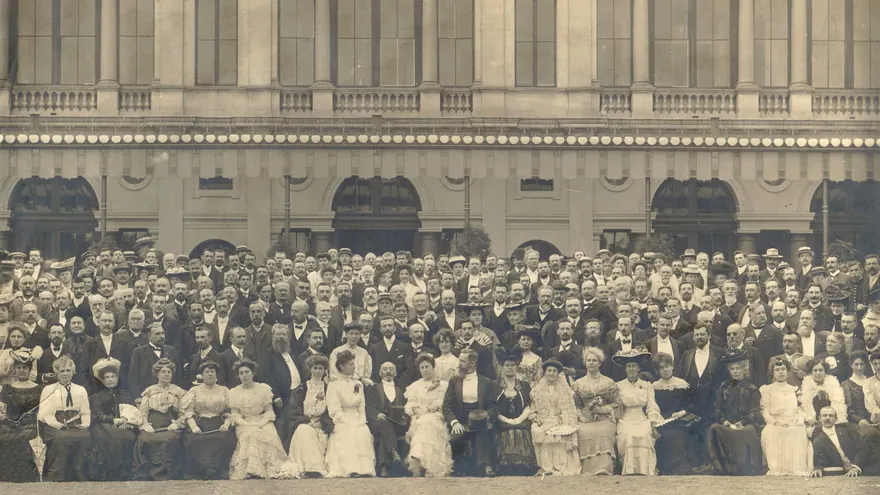
In 1888 in Rochester, a former Canadian servant wanted to open a hair salon with the money she had saved. The Powers Building, the city's smartest business block, did not want to let her in; according to the Rochester Beacon, Martha Matilda Harper had to take the building to court to open her salon.
Harper had been sent into service at the age of seven and spent twenty-two years in other people's houses in Canada. According to Wikipedia's account, her last employer there was a doctor, who taught her about hair care and, when he died, left her the formula for his hair tonic. Among those who encouraged her to open a salon in Rochester, according to the National Women's Hall of Fame, were the suffragist Susan B. Anthony and her circle.
Her real invention came three years later. In 1891, to multiply her salon, Harper chose a path that did not yet have a name: she let other women use her name, her products and her method. The first licensed salon opened in Buffalo. According to the Rochester Beacon, the first hundred were set aside for poor women who, like her, had come out of domestic service. Harper trained them and inspected the salons one by one. By the 1920s there were close to 500 Harper salons across several continents. The reclining shampoo chair you see in salons today was her invention too.
What is a franchise?
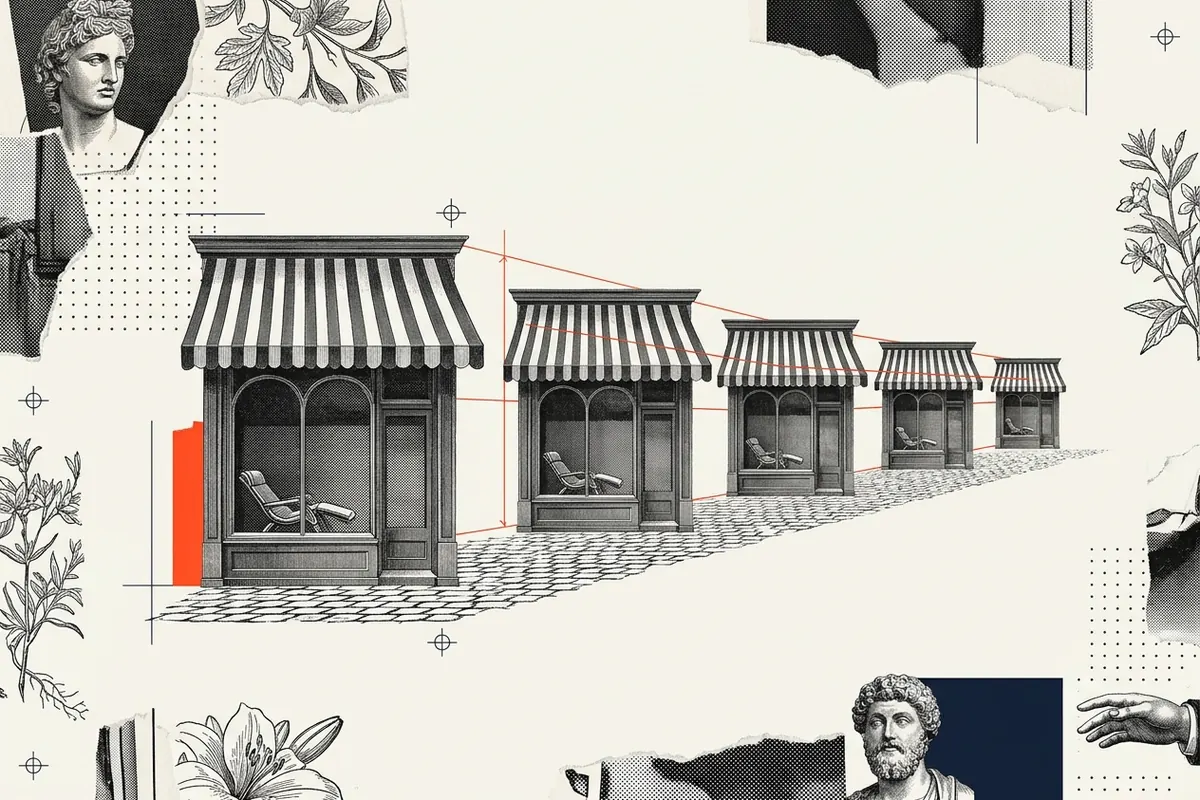
Today the arrangement Harper built is called a franchise. The brand owner lets someone else use its name, its product and its way of running the business; in return it takes an entry fee and a regular share of sales. The brand grows without opening shops with its own money. The franchisee starts with a tested system instead of building a brand from scratch.
On paper both sides win. In practice, who earns what is hidden in the detail of the contract.
The real cost of buying a franchise
In January 2020 Zachary Crockett of The Hustle went through the franchise disclosure documents of the 22 largest fast-food chains in the United States and spoke to more than a dozen franchisees. The average chain wanted an applicant to have a net worth of at least USD 1 million, USD 500,000 of it in cash. The franchise fee averaged around USD 30,000, but the real burden was the shop itself: with land, building and equipment, the total initial investment ranged from USD 777,000 to USD 1.9 million.
Shareef Aminmadani, whose family runs 64 Taco Bells, put the cost of one restaurant at USD 1.6 to 2.3 million in 2020, and told Crockett he paid about a quarter of it in cash and covered the rest with loans and partners. The bill does not stop at opening: chains take a royalty of 4% to 8% of monthly sales, and another 2% to 6% for advertising.
The reverse model: an almost free franchise
In the same analysis Chick-fil-A stood at the opposite end of the table. On 2020 figures the chain asked an operator for an entry fee of just USD 10,000. It paid for opening the restaurant itself and kept ownership of the land and the equipment. In return it took 15% of sales and half of the profit.
The price of this generous-looking deal was paid elsewhere. According to the figures the company gave The Hustle in 2020, about 60,000 people applied every year and around 80 were chosen. Those chosen worked 60-hour weeks and took home 5% to 7% of revenue; but they owned neither the restaurant nor a share of the business, and in most cases could not open a second one. As Kenny Rose, chief executive of Franshares, which offers fractional investment in franchises, told Crockett, it was less ownership than a traditional management job.
When does a franchise work?
Make one shop profitable first
Harper ran her own salon for three years before licensing anyone. A franchise multiplies a profitable shop; if it multiplies an unprofitable one, it multiplies the losses too.
Sell the method, not the name
Harper trained her franchisees and inspected them. What you sell in a franchise is not a sign over the door but a written system that gives the same result in every shop. If you cannot write the system down, you do not yet have anything to franchise.
Know from the start who owns what
In the classic model capital and risk sit with the franchisee; in the Chick-fil-A model both sit with the brand. Whichever side you are on, ask before you sign who owns the shop, the customer records and the right to walk away.
Do the sums from the franchisee's pocket
According to the annual reports Crockett gathered, margins at franchised restaurants in 2020 ranged from under 1% at Pizza Hut to 13% at KFC. In the Franchise Business Review research he cited, 51% of food franchisees earned less than USD 50,000 a year. If you are the one granting franchises, a system whose franchisees do not earn will not last long.
From freedom to selling: two faces of a word
The English franchise comes from the Old French franchise, meaning "freedom" and "nobility"; its root is franc, "free", from the Latin Francus, the name of the Franks. Today the same word describes a contract in which you follow someone else's rules down to the chair your customers sit in.
The Turkish word for a franchisee or dealer, bayi, looks from another angle: through Ottoman Turkish it comes from the Arabic bāʾiʿ, "seller", and carries the root b-y-ʿ, "to sell". The western word speaks of freedom, the Turkish one of selling. A franchise sits somewhere between the two.
Choosing the part, playing the part
In chapter 17 of the Enchiridion, Epictetus compares a person to an actor in a play whose shape is decided by the one who writes and stages it:
"σὸν γὰρ τοῦτ' ἔστι, τὸ δοθὲν ὑποκρίνασθαι πρόσωπον καλῶς: ἐκλέξασθαι δ' αὐτὸ ἄλλου."
"Your business is to play well the part you are given; to choose it belongs to another."
A franchise means playing a part well in a play someone else has written; Harper wrote her own and handed out the parts. Do you want to write your own play, or be the best actor in a well-written one?
If you are torn between building from scratch and buying a going concern, Hazır İşletme Devralmak is worth a read.