Hiring Your First Employees: How Do You Choose the Right Person?

Leipzig, summer 1722. The city's most prestigious musical post has fallen vacant. Thomaskantor Johann Kuhnau died on 5 June, and the city council is looking for a successor. Whoever takes the job will be responsible for the music of the city's four churches and for the singing tuition of the Thomas School pupils.
The council's first choice is clear: Georg Philipp Telemann, one of the most famous composers of the day. Telemann is elected, but Hamburg gives him a pay rise and he stays put. A second attempt follows. This time the choice falls on Christoph Graupner, court Kapellmeister in Darmstadt. But the Landgrave of Hesse-Darmstadt will not let him go.
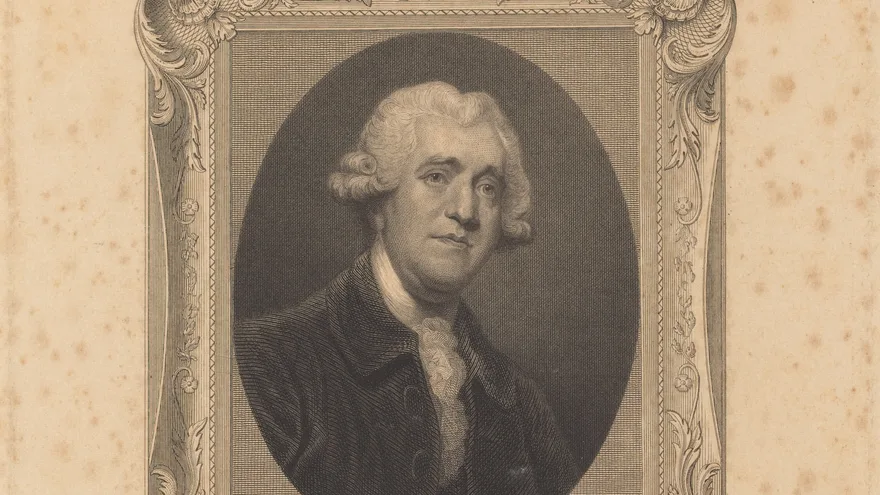
There is one more candidate on the list: the music director to a prince in Köthen. On 7 February 1723 he conducted two cantatas at St Thomas's Church as a trial, and everyone knowledgeable in the local press praised him. His name is Johann Sebastian Bach.
In the incomplete minutes of the council meeting of 9 April 1723, one sentence stands out: since the best could not be had, they would have to make do with a mediocre one. On 22 April Bach is appointed as the third choice. His contract includes teaching Latin; he secures permission to hand those lessons over to his assistants.
The man Leipzig hired as "mediocre" held the post for twenty-seven years, until his death. Today he is the best-known Thomaskantor in history.
In a small team, every hire is a composition
A startup's first employees are the company's first notes. In a ten-person team, one wrong person is a tenth of the staff. First Round Review's guide to hiring starts from the same place: in a startup where resources are scarce, putting the right person in an empty seat is one of the most important decisions you can make. And unwinding a bad hire can set a team back by months.
The guide's advice is simple: even in a startup that worships speed, take your foot off the accelerator when hiring. The Leipzig council had not actually rushed. The problem was not speed; it was what they were measuring.
Steps you can follow when hiring your first employees
Do not copy the job description; rewrite it
According to Amber Madison, co-founder of Peoplism, a good hiring process is built on the job description. Copying an old listing or borrowing from other companies' ads is easy, but it leaves the foundations rotten. A good description contains four things: the competencies the role requires, the impact the role will have, what success looks like in the first six months, and the company's values.
Thumbtack founder Marco Zappacosta warns against long wish lists. In his view, a listing that asks for everything brings you someone middling at everything, because no single person has that whole list. In the end you choose the person with no weaknesses rather than the one with real strengths. The Leipzig council, too, was looking for a musician and expected him to teach Latin.
Ask unexpected questions, and ask everyone the same ones
Candidates arrive prepared for "What's your biggest weakness?" The questions collected in the guide go deeper. Michael Vaughan, Venmo's former COO, asks candidates about the proudest moment of their last five years, and notices whether they describe a personal achievement, their team's success or the company's.
Bryan Mason, a former executive at VSCO, asks: what is something you are very good at but never want to do again? Mason warns that candidates surprisingly often name the very job they are being hired for. Then there is the structured interview: asking every candidate for the same role the same questions. That makes it easier to tell a good answer from a great one.
Set a real trial task
This is exactly what Bach did in Leipzig: he did the job itself as a trial. The guide also recommends, after interviews, an assignment that mimics the role's day-to-day work, such as anonymised real data or a real piece of code. Look not only at the result but at the questions the candidate asks and how they manage their time.
If you are going to ask for a presentation, first consider whether the role really needs one. For sales or management, stage presence matters. For a designer or a developer, though, a presentation can lead you to score charisma instead of the quality of the work.
Decide on a scorecard, not around the meeting table
According to Liz Kofman-Burns, Peoplism's other co-founder, the team eventually scrapped the meeting where interviewers discussed a candidate together. In a group setting, decisions drifted away from competencies towards impressions of personality. In its place, a simple table like Dan Pupius's example is recommended: the skills you are looking for on the left, a rating of low, medium, high or not observed for each, and the concrete evidence behind each rating.
Check references early and in depth
Zappacosta advises against leaving reference calls to the end of the process. By then, you are only hoping not to hear anything bad. One of his favourite questions: if you were in my shoes, what would you want to know about this person that I haven't asked?
Candidate: the one dressed in white
The English word "candidate" comes from the Latin "candidatus". According to Etymonline, its first meaning was "white-robed". In ancient Rome, those seeking office wore a bright white toga, probably whitened with fine chalk dust: the toga candida. The root "candere" means to shine; "candle" belongs to the same family. The Turkish word for candidate, "aday", by contrast, is according to the Nişanyan Dictionary a New Turkish coinage derived from "ad" (name), recorded in 1935 as a replacement for the older "namzet".
Rome's shining toga lives on in today's interviews. In his 1920 paper "A Constant Error in Psychological Ratings", the psychologist Edward Thorndike examined the scores two commanding officers gave their soldiers for physique, intelligence, leadership and character. The scores were too similar: a soldier rated brilliant in one area looked brilliant in the others too. Thorndike called this the halo effect.
Fluent speech, an impressive presentation or a familiar university name can paint the whole candidate white. That is why the scorecard exists: to see the person underneath, not the toga.
Final word
In the second book of the Analects attributed to Confucius, there is a method of assessment written long before any hiring guide:
"Look at what he does. Observe why he does it. Examine what brings him peace. How can a man hide himself? How can a man hide himself?"
The Leipzig council thought Bach mediocre because it measured him in the shadow of Telemann and Graupner. In whose shadow is your first employee being measured? And are you scoring the candidate's toga, or the work they do?
If you want to try the art of asking questions with your customers too, have a look at How to Run a Customer Interview.